
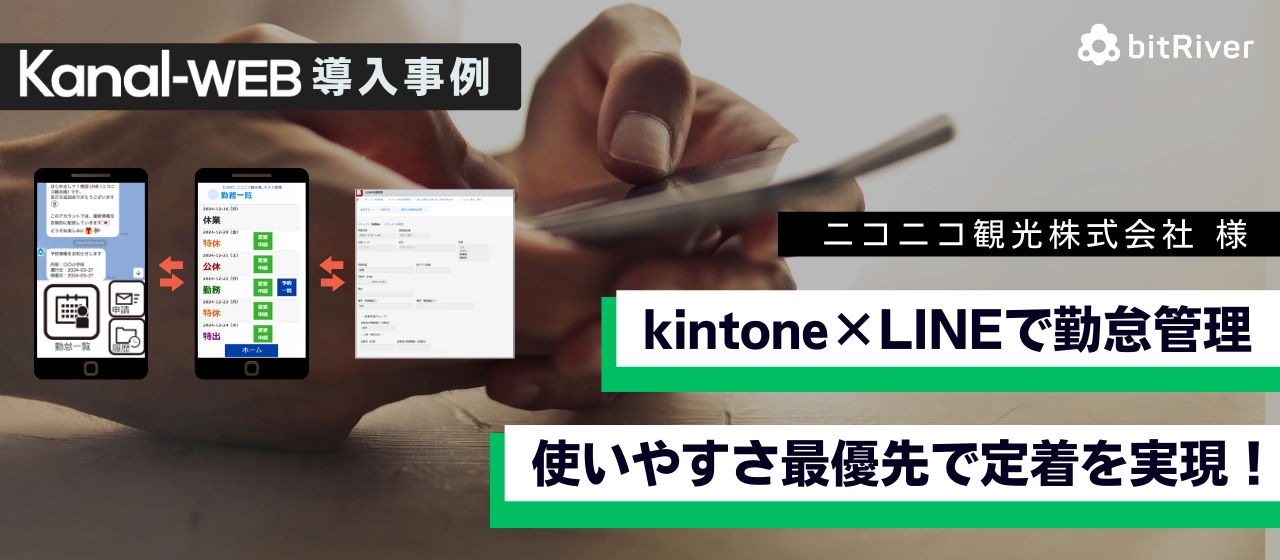
This case study introduces Niconico Kanko Co., Ltd., which streamlined employee attendance requests, previously submitted on paper forms, by introducing the LINE option of Kanal-WEB, a plugin for building kintone-integrated My Pages.
Based in Fukuyama, Hiroshima Prefecture, Niconico Kanko operates taxis and charter buses and organizes bus tours. The company had been processing paper attendance requests by hand, which made management cumbersome. By building on its existing kintone environment and creating a LINE-based system with Kanal-WEB, the company centralized attendance management and significantly improved operational efficiency. Convenience has also improved dramatically for the drivers who submit requests.
What stands out is the decision to use LINE. Some of the drivers, many of whom are older, were unfamiliar with LINE, but a design that thoroughly prioritized ease of use enabled smooth adoption within a short period.
In this case study, we take a detailed look at the background and results through an interview with Hagiwara, who handled everything from system selection through implementation to day-to-day use.
Challenges
In 2021, Niconico Kanko introduced kintone to keep internal information from depending on specific individuals and to share information efficiently. This improved visibility across the company's operations.
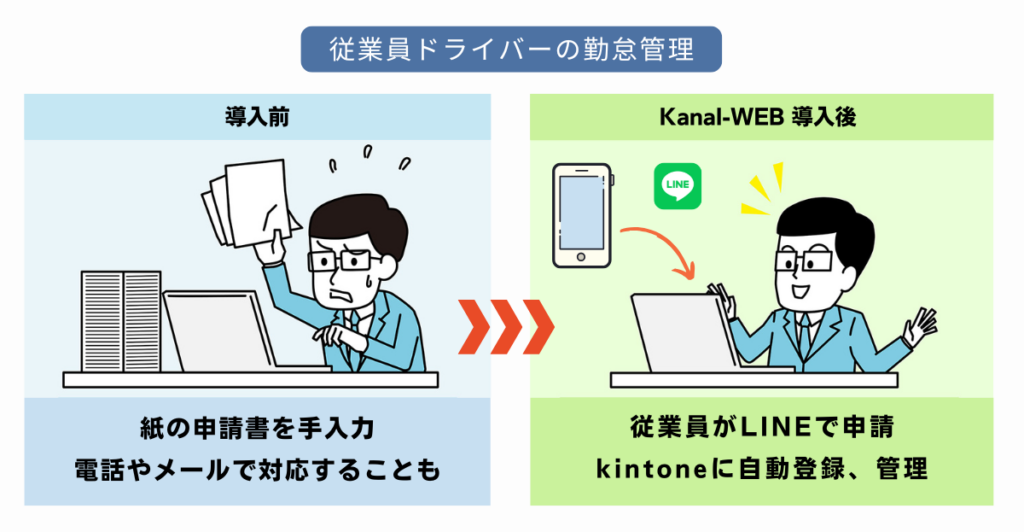
However, with a workforce of roughly 80 employees, including taxi and bus drivers, attendance management and paid leave requests were still handled on paper. Changes to requests were sometimes accepted by phone or email as well. This people-dependent processing had led to the following issues:
- Missed submissions and checking errors
Human errors were frequent, such as "thinking a request had been submitted when it actually hadn't," "not noticing unprocessed requests," "transcription errors," and "mishearing details over the phone." - Having to come to the office
For drivers handling pick-ups and drop-offs in particular, coming to the office just to submit a request was a heavy and inefficient burden.
To solve these issues, the company considered a system that could be operated easily on a smartphone, one that would build on integration with its existing kintone while taking into account the working style of drivers who spend much of their time outside the office.
Why They Chose Kanal-WEB
According to the company, when it contacted partner companies introduced by Cybozu, bitRiver was the only one that proposed, "Let's use LINE!"
1. A New Perspective: Using LINE
Other companies' proposals did not go beyond enhancing existing systems or conventional digitization. bitRiver's idea of using LINE, by contrast, offered an entirely new perspective.
A key advantage of using LINE for attendance management is that employees can keep using a tool they are already familiar with every day. Being able to submit requests easily as an extension of the LINE app they already use, without the hassle of logging in to a new dedicated system, is highly appealing to employees.
Furthermore, the company felt that LINE's intuitive usability made it highly likely to be readily accepted by older employees as well. It expected this approach to deliver a system that staff across a wide range of ages and roles could use without difficulty.
2. A Proposal That Could Carry Through to Adoption
In response to the company's somewhat vague request to "manage things using smartphones," made with drivers working outside the office in mind, bitRiver presented a concrete picture of how the system would be operated.
Had the company introduced a system that required downloading a new app or logging in to a website, there would have been a risk that adoption would be delayed, or might not happen at all, because of password management and the hassle of logging in. Using LINE avoids these issues, which is another major advantage for smooth adoption.
The proposal for a system in which request details are easily entered via LINE and automatically reflected in kintone matched the company's needs. Visually clear demos and case study presentations also gave a clear picture of how the system would run after implementation, which proved decisive.
3. Flexible Responsiveness to Frontline Needs
Hagiwara says the approach of putting user-friendliness first was impressive. In particular, the proposed support system that took older employees into account and the concrete plans for helping staff unfamiliar with the operations came across as strengths no other company offered.
Weighing all of these factors together, Niconico Kanko decided to introduce Kanal-WEB. In the end, a proposal that precisely met the company's needs and a clear picture of smooth operation after implementation were the deciding factors.
System Architecture
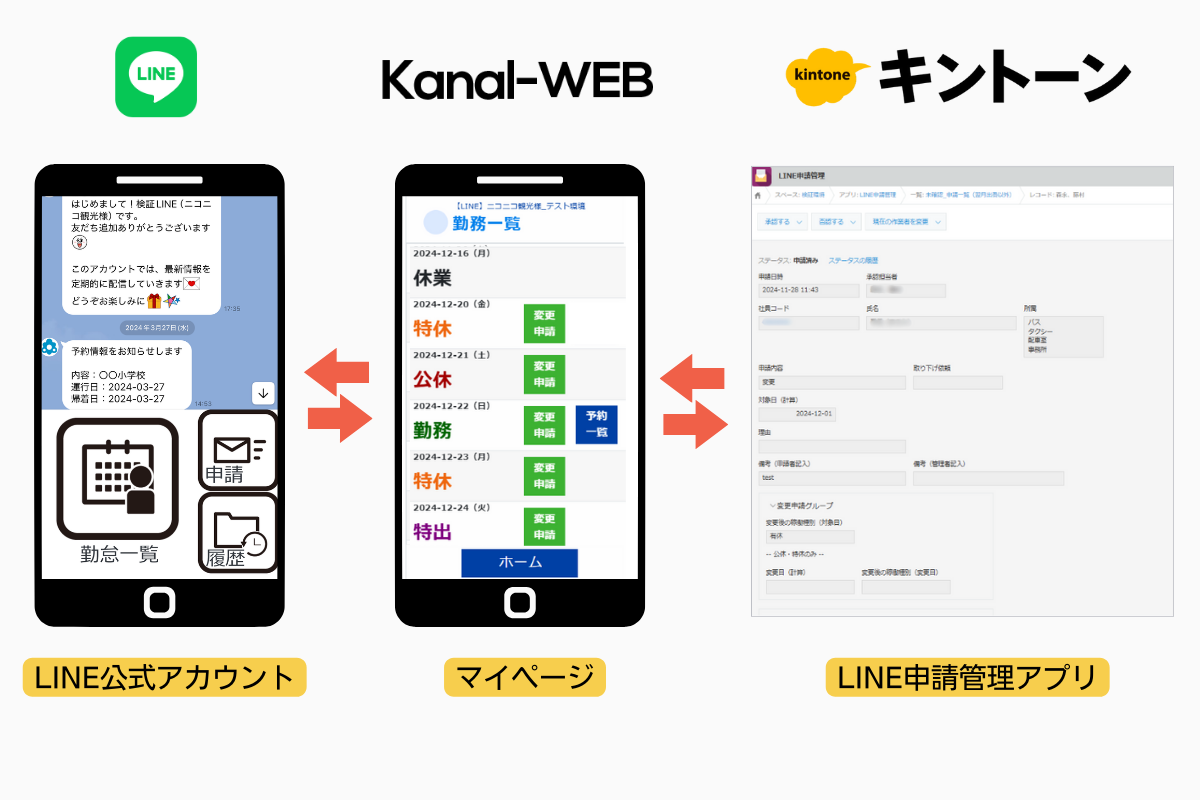
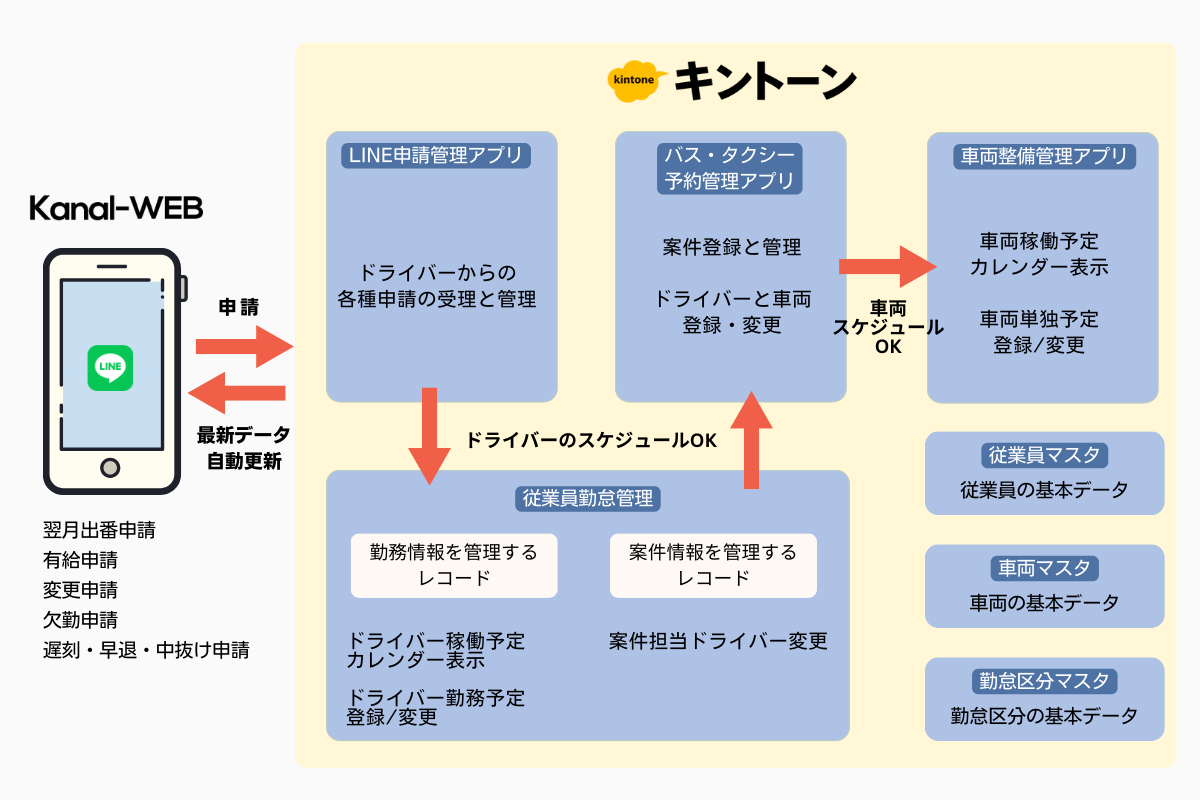
Kanal-WEB, introduced in this project, is a plugin for building My Pages (member sites) integrated with kintone.
A key feature of this case is that the system, linked to employee information in kintone, was built exclusively on LINE rather than as a typical web-based My Page.
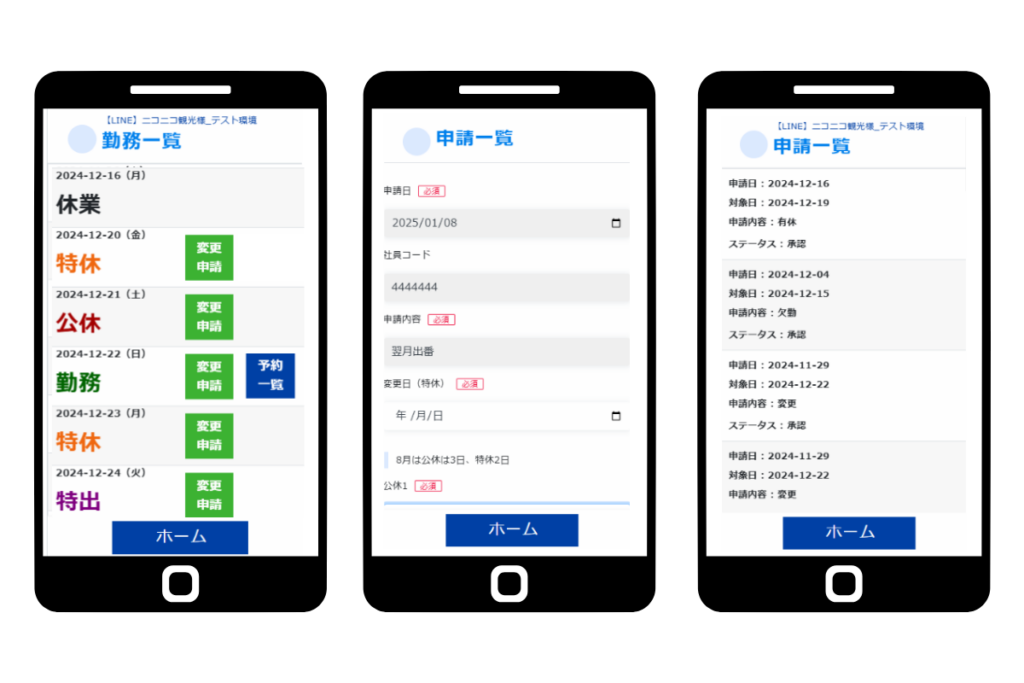
Intuitive Operation Design
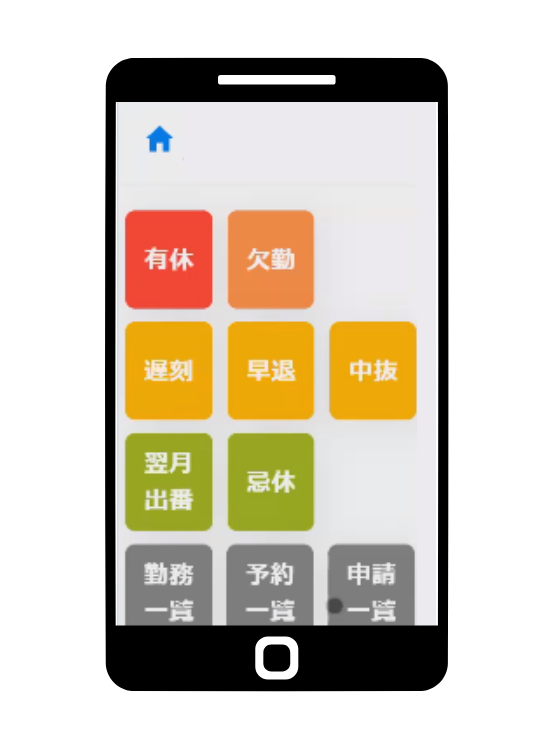
With many older drivers in mind, the team enlarged on-screen elements and adopted a design that makes each step intuitive, so that anyone can use it easily.
With ease of use as the top priority, the design focuses specifically on visibility and operability.
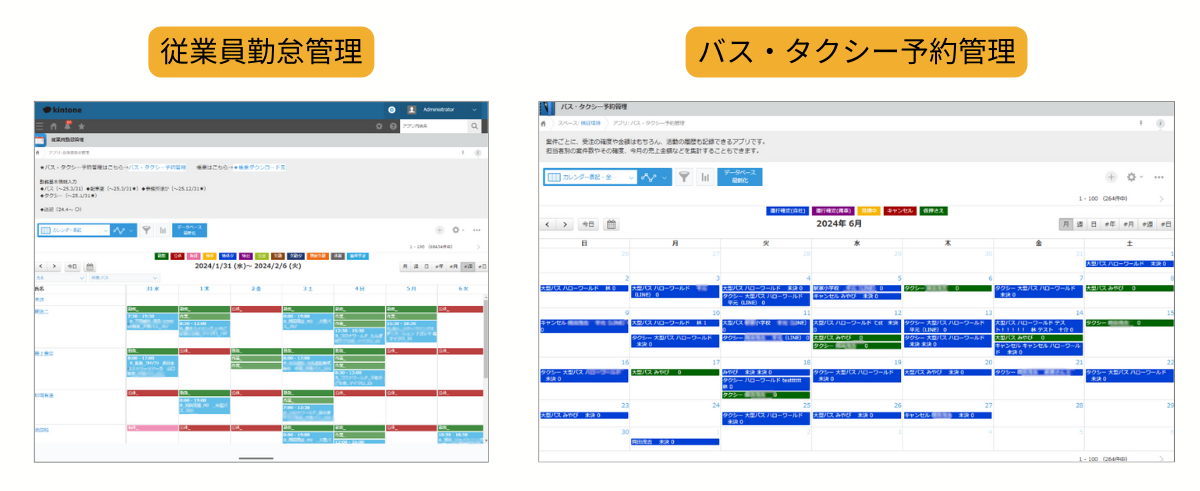
Intuitive Calendar Management
bitRiver supported the integration of kintone with the Calendar Plus plugin.
The calendar view now makes it easy to see employee attendance and vehicle reservations at a glance.
Results After Implementation
Not only were the issues the company faced before implementation resolved, but it has also achieved greater operational efficiency and higher employee satisfaction than expected.
1. More Convenient Request Procedures
Before implementation, drivers had to come all the way to the office just to request paid leave or submit their shifts, or else communicate by phone or email. Since Kanal-WEB was introduced, they can submit requests from their smartphones via LINE, bringing the following improvements in convenience:
- Requests can be submitted from anywhere
Requests can be submitted from home or on the go, greatly reducing the burden on drivers. - Less time spent on requests
Compared with the previous paper- and phone-based methods, the procedure has been simplified and can now be completed in just a few taps.
2. Fewer Human Errors
With the previous paper- and phone-based requests, the following errors occurred frequently:
- "I thought I had submitted it, but I hadn't."
- "The office missed processing a request."
- "Details of a request made by phone weren't conveyed accurately."
With Kanal-WEB, what drivers enter in LINE themselves is registered directly in kintone. As a result, request information is recorded accurately, bringing the following benefits:
- No errors during data entry
- Request details are easier to check because paper and email are no longer involved
- Lower risk of requests being left unprocessed
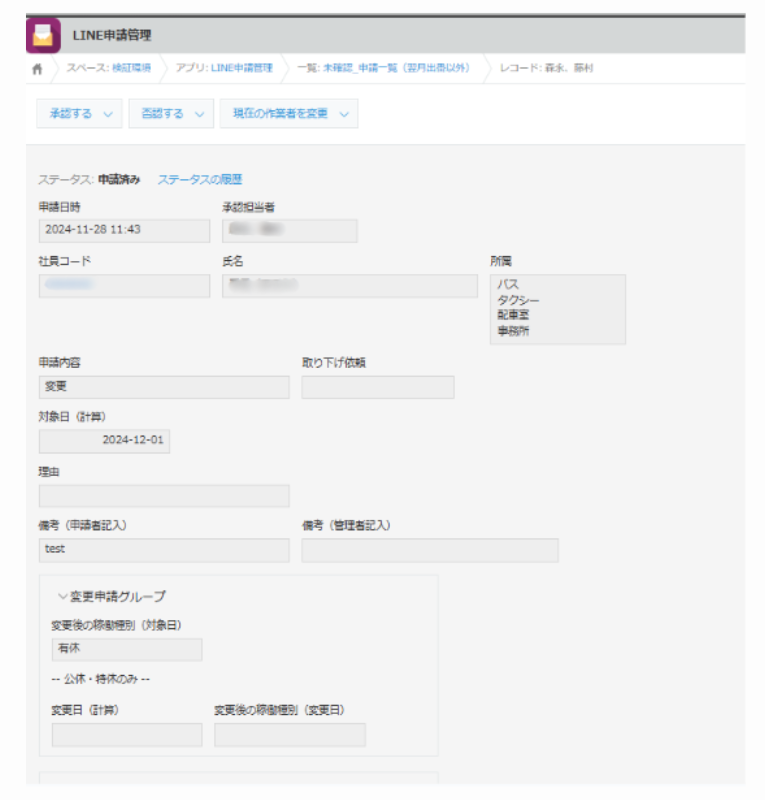
3. More Efficient Internal Operations
Kanal-WEB has significantly reduced the workload of the administrative department.
- Less time spent on tasks
Data previously managed on paper and in Excel has been consolidated into kintone, enabling centralized management. This has dramatically reduced the time needed to check and process request forms. - Smooth handovers
Using kintone enables real-time information sharing and keeps work from depending on specific individuals. As a result, the company now has a setup in which work can be handed over smoothly even when the person in charge changes. - Making better use of time
The time saved can now be devoted to other important work, improving productivity across the entire administrative department.
Challenges During Implementation
At first, with so many older drivers, there were concerns about whether LINE would take hold. Some drivers had never used LINE at all. However, the following efforts led to smooth adoption.
- Help with installing LINE
The team worked closely with each person, helping them install LINE and get comfortable with their smartphones. - Creating guidance materials
The team prepared intuitive, easy-to-understand materials and carefully explained how to use the system. - Setting a transition period
August 2024 was designated as a transition period. Allowing ample time to prepare meant that usage was well established by the time full operation began in September.
For the look and feel of the system, the team prioritized making everything as easy to understand as possible and used larger text and buttons. As a result, the system has been embraced by older drivers as well.
After the Interview
This case is a prime example of significantly improving organization-wide productivity by flexibly adopting new technology built around an existing system (kintone). Thoughtful touches, such as robust support during implementation and an interface designed from the employees' perspective, also contributed greatly to the system's successful adoption.
What stands out in particular is that the company built a system accepted by a wide range of employees, including older staff. Adopting digital tools usually poses high hurdles for older people, but LINE's familiarity and intuitive operation, combined with an easy-to-use look designed with visibility in mind, helped drive adoption.
For companies looking to review or streamline their attendance management, Niconico Kanko's case offers a valuable, practical model worth learning from.
Try It on the Actual Screens
Try all features free for 30 days.